Time Management, Finances and Routines: Real Productivity Talk for Freelancers
The whole reason I built and have maintained this business is because I am so tired of trying to follow time, financial, and productivity advice built for conventional lives. It doesn't work — OR I have to completely adjust who I am just to make it work.
Time: Sure, blocking out an hour every Monday to work on this blog would be pretty cool. But content creation isn't something I can force at any given second on the clock.
Finances: I'll have a month where I make $3,000 and a month where I make $15,000. I'm actively staring at two months this summer that will be primarily without scheduled work.
Routines: Nothing gets me more fired up than someone bragging about their perfectly optimized morning routine. I don't — and cannot — go to sleep or wake up at the same time every day. Every week is scheduled differently, and that schedule can change with only 24 hours of warning.
Books, blogs, influencers — the entire framework we follow for productivity was designed around the 9-5 work structure. Fixed hours, fixed income, fixed roles, fixed routines. When you're a freelancer or solopreneur, none of those things are fixed. The tools that work beautifully for conventional lives were simply never designed for ours. We're just living life differently.
Time Management for Freelancers
The 9-5 world manages time by the clock. Show up at 9, leave at 5, meetings on the calendar, tasks in between. But a freelancer's time is shaped by client work, creative energy, life admin, and a schedule that looks different every single week. Even a solopreneur can't really hold the 9-5 boundary. If a photographer only took calls from 9-5 for potential clients, their potential clients — who presumably work 9-5 — would have a horrible time booking those calls. Not to mention that a family reunion or wedding doesn't exactly happen within the 9-5 framework.

A freelancer needs to take into account energy, types of tasks, personal boundaries and life duties when managing their time. The same goes for those of us navigating chronic illness too.
Here's what works for me: I start every week by scheduling my theatre work first. It's mostly non-negotiable and can usually be anticipated by Sunday. After that I move into energy-based planning with priorities. Working out goes in my most energized windows. Content creation goes in my creative windows. Rest and me-time go in my rejuvenating windows. And that's about as far ahead as I schedule. Everything else lives in a task management system that lets me handle time, energy and priorities day by day.
This works for me — but it won't work for everyone. A more fluid, day-by-day approach requires someone who's genuinely good at holding themselves accountable. If that's not you, there are plenty of other options worth exploring: day theming, time boxing, flexible weekly templates, the Pomodoro technique, or yes — even time blocking, to an extent. The point isn't to find the "right" method. It's to find yours.
Financial Management for Freelancers
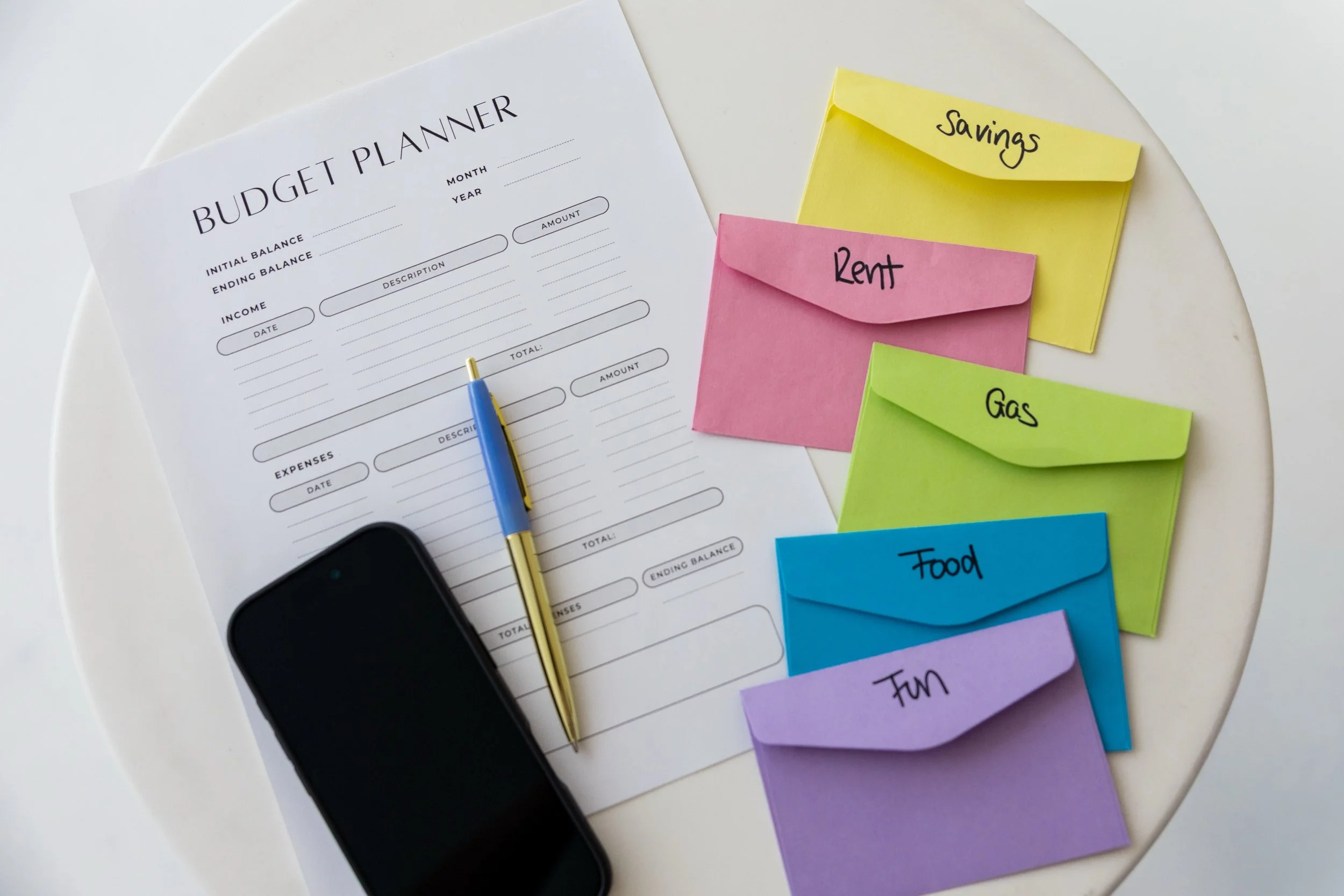
The conventional life runs on a steady paycheck — something you can count on every week, biweekly or monthly, often with benefits built in. Savings advice, investment strategies, tax guidance, retirement planning — almost all of it is designed around that steady income. Very rarely does mainstream financial advice account for irregular income, 1099 work, or having to source and pay for your own benefits. And that's before we even get to the solo freelancers and solopreneurs out there navigating a single income household in a world designed for two.
Financial management is honestly what first hooked my interest in systems and strategy. Moving to New York City on my own — with some savings, thankfully — and getting thrown headfirst into the world of 1099s, irregular income and self-funded benefits with no prior roadmap? Thrilling is one word for it.
I love breaking down finances with freelancers. I'm not an accountant, a tax expert or a financial planner — and I don't think that's actually where freelancers need to start anyway. Start with the basics: understanding your true expenses, building a backup fund, knowing what to set aside for taxes, and getting a system in place to track it all. Two books I keep coming back to: Profit First by Mike Michalowicz — which gives irregular income earners a framework for allocating money as it comes in rather than hoping there's enough left at the end of the month — and I Will Teach You to Be Rich by Ramit Sethi, which tackles the mindset and automation side of personal finance in a way that actually sticks. If reading two finance books sounds like a nightmare, that's exactly what I am here for.
Routines for Freelancers (or the lack thereof)
GAHHH… The *wake up at 6, journal, meditate, be at your desk by 8am* messaging will be the hill I die on. With our unpredictable schedules alone, this standard just doesn't hold. And for those of us managing chronic illness, this one hits differently — because yes, a consistent sleep routine has real health benefits, but for some of us that simply isn't our reality. And jumping to a conventional career isn't always a realistic solution either.

However, the older I get the more I've genuinely embraced routines — but mine are not tied to the clock. They're tied to habits, moments, and open space.
Habit-based routines look like: when I come home, everything from my pockets goes on the entry shelf. Every single time, without thinking.
Moment-based routines look like: my alarm is set for nine hours after I go to sleep, whatever time that is. When I get out of the shower I check my schedule and the weather. These happen at different times every day but they always happen.
Space-based routines look like: my journal is always with me. I don't schedule journaling — I reach for it when the mood strikes or when an unexpected gap opens up in my day.
None of these require a specific time. All of them create consistency.
Solopreneurs Are a Team - Alone
Solopreneurs are superheroes. Full stop.

A solopreneur is their own finance department, HR team, project manager, scheduler, admin assistant, and marketing department — all on top of the actual work they started their business to do. In a standard 9-5 world, a person occupies one role within one of those departments. A solopreneur occupies all of them, every day, for both their work life and their personal life simultaneously. Mainstream productivity advice is almost always written for one or the other. We're managing both.
(And a separate shoutout to the solo freelancers out there too — running a home by yourself is no small thing.)This is where systems and strategy stop being a nice-to-have and become genuinely non-negotiable. Not because you need to be more efficient. But because you are doing the work of an entire team, alone, and you deserve infrastructure that reflects that. When set up correctly, your systems are your team. They hold things so you don't have to. They keep things from falling through the cracks on the hard days. They give you room to breathe.
You're not behind. You're not failing.
You've been playing a game with directions written for a completely different lifestyle.
The good news is you get to write your own. You don't need to fit your incredible, unconventional self into a box that was never made for you. But you do need to get to know yourself — deeply. Understanding what actually works for you, and what doesn't, is always step one.
That's exactly what I'm here for. I would love to get to know you, your life, and what's getting in the way — and help you design systems and strategy that actually fit. This is what I call: Free yet Focused.